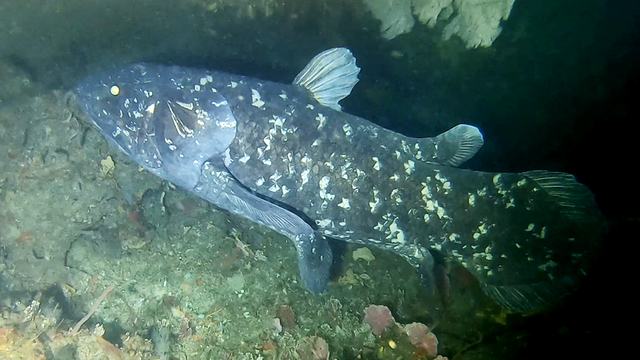
Seen at 69 m
Coelacanth
Known from fossils long before scientists found one alive in 1938. This one was photographed alive, 69 m down off South Africa, in 2019.
Photo: Bruce A.S. Henderson · CC BY 4.0
Everyone on a Lowcountry dock sees the dolphins go by. We're a dad and his teenage son putting a microphone in the water at ours to hear them, and following the ocean all the way down.
● Simulation · nothing is in the water yetEvery animal picture and sound here is real and credited: expedition photos, research recordings. No AI-generated animals, ever.
An underwater microphone for the creek first, from a $65 kit. Then a camera to lower from a boat, tested in a pool first.
Software can say “this might be a dolphin.” Only a person listening can say “it was.” The site always shows which one you're looking at.
Shrimp snap. Fish grunt and drum to find mates. Dolphins whistle to each other and click to find their way. We went through the research for North American coasts, animal by animal, to find out what a microphone in the water could actually pick up.
What the research expects in a Southeast estuary. None of it heard by us yet.
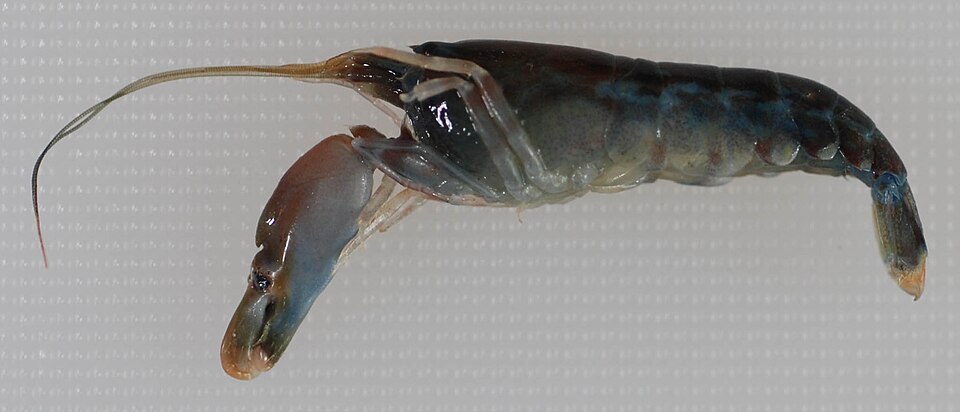 dockSnapping shrimp
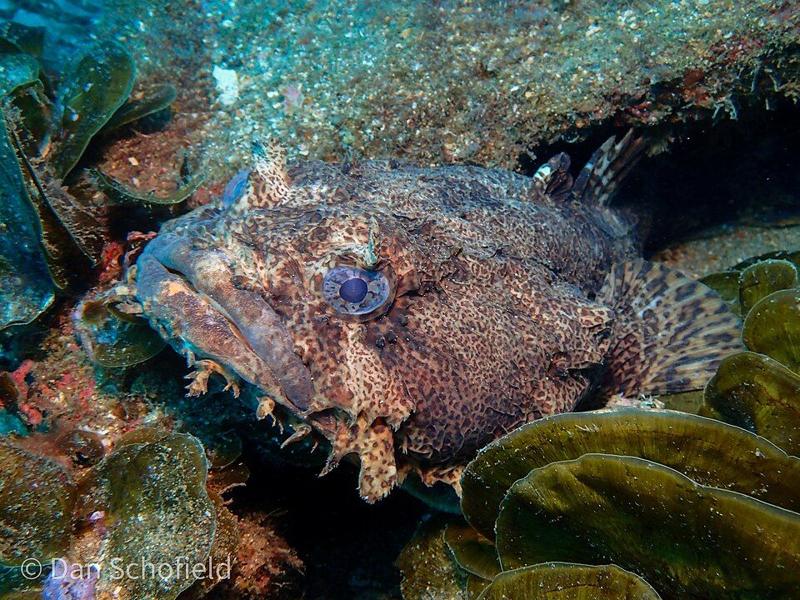
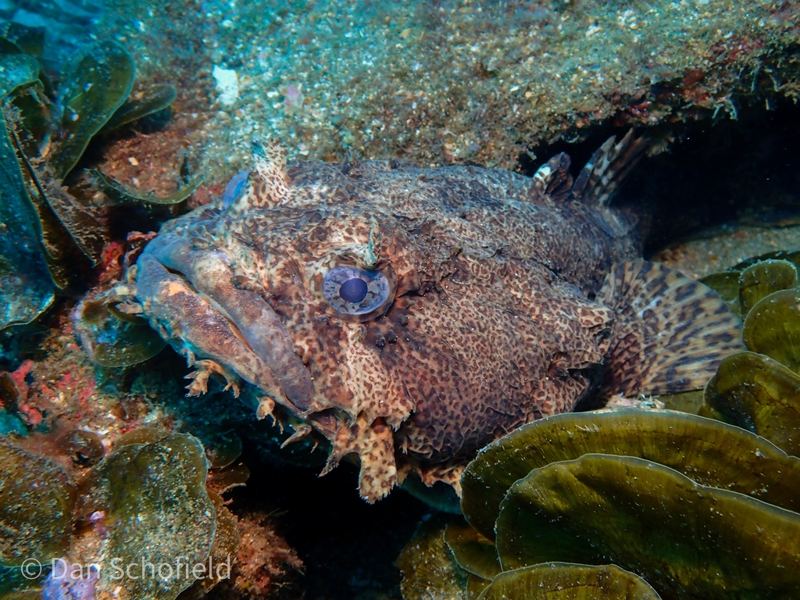 dockOyster toadfish
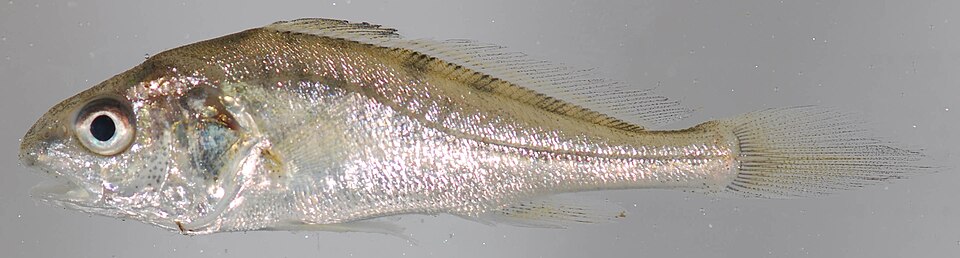
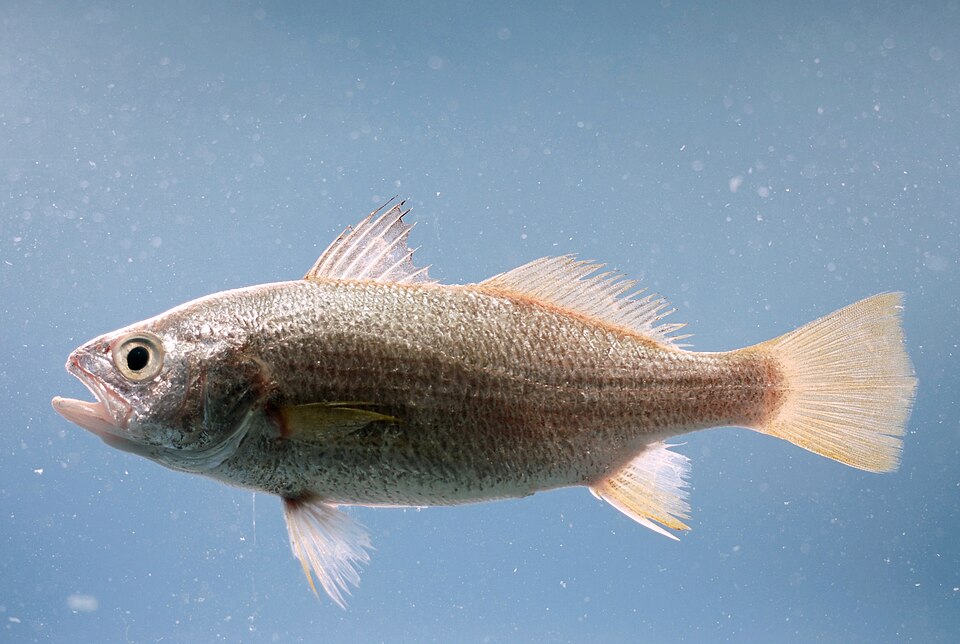 dockSilver perch
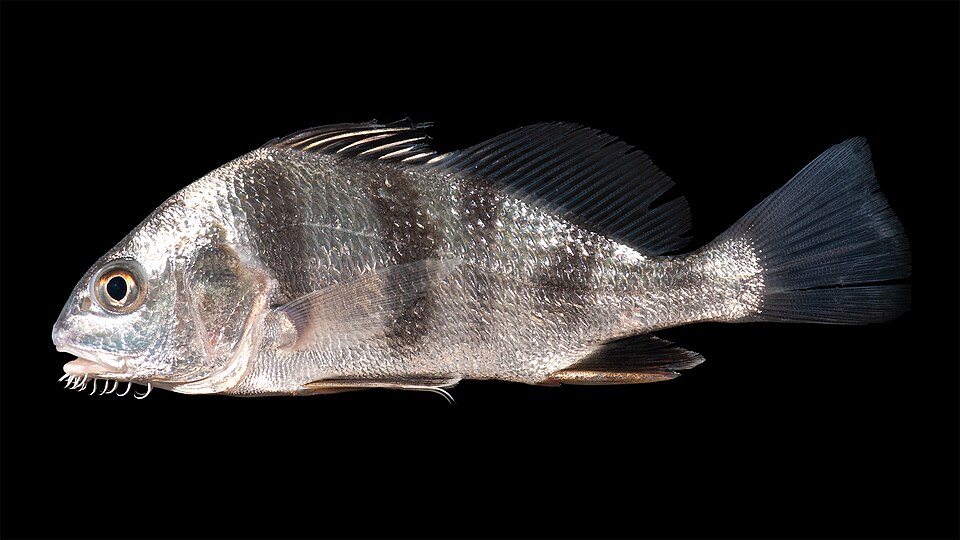
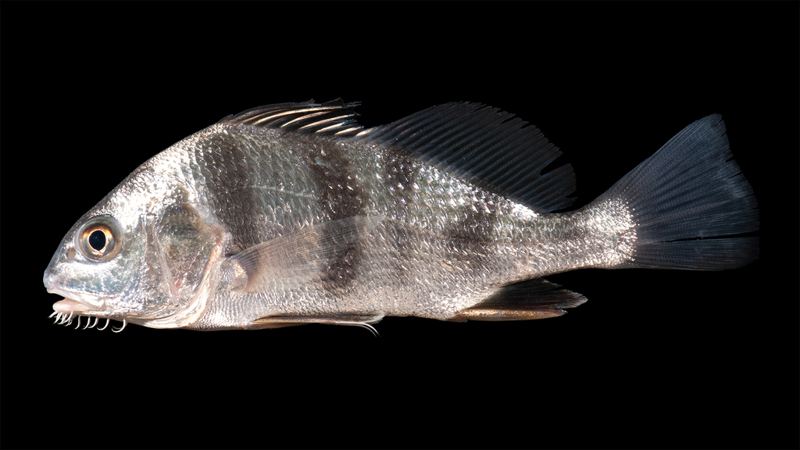 dockBlack drum
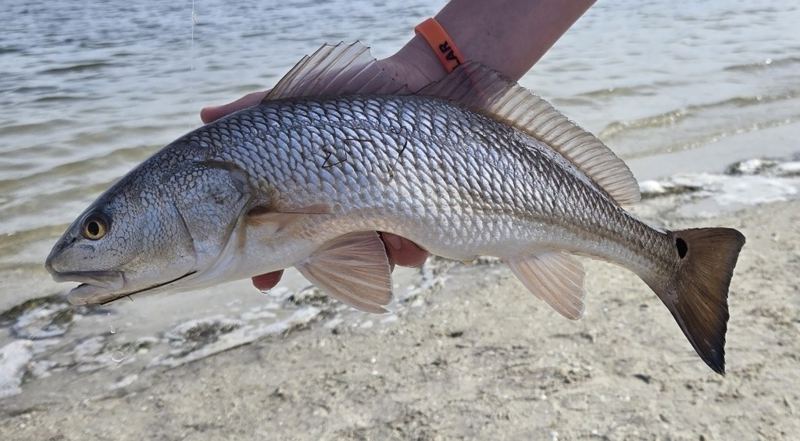 dockRed drum
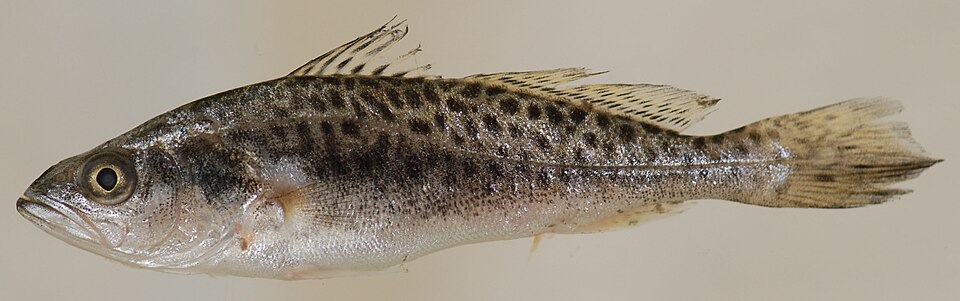
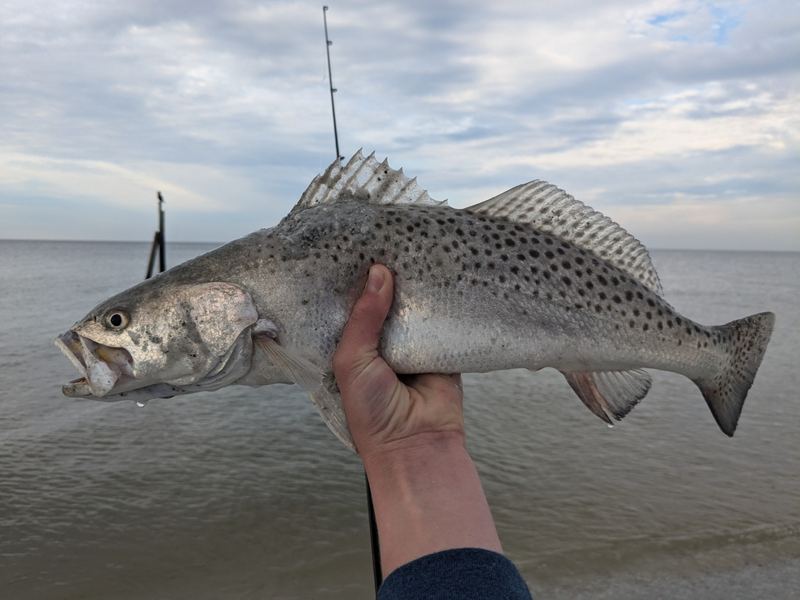 dockSpotted seatrout
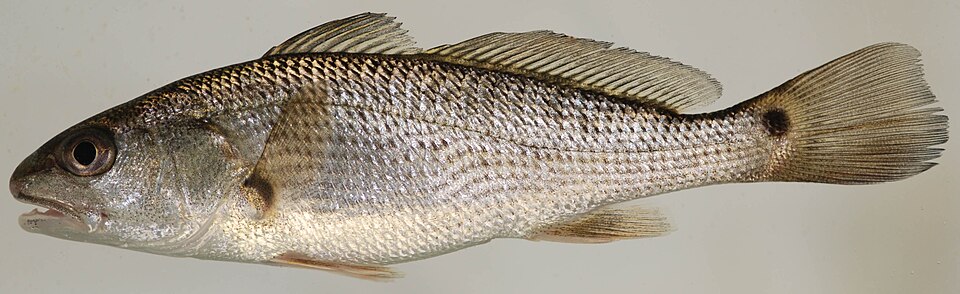
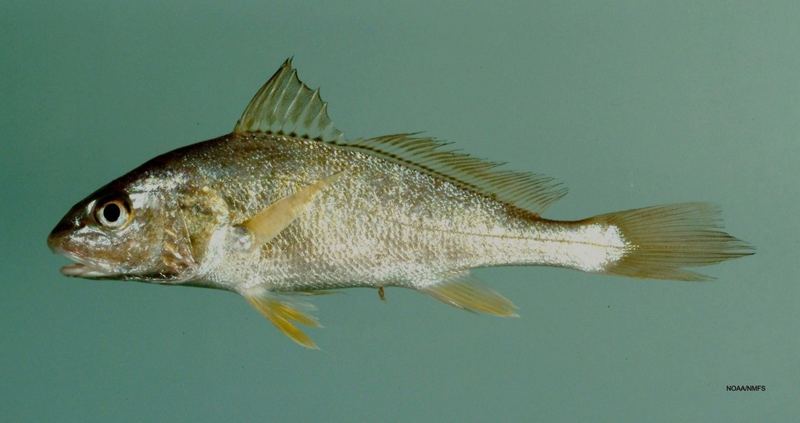 dockAtlantic croaker
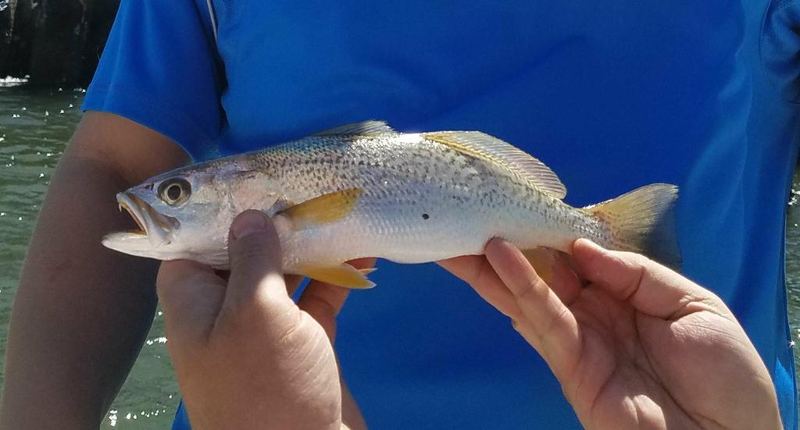 Weakfish
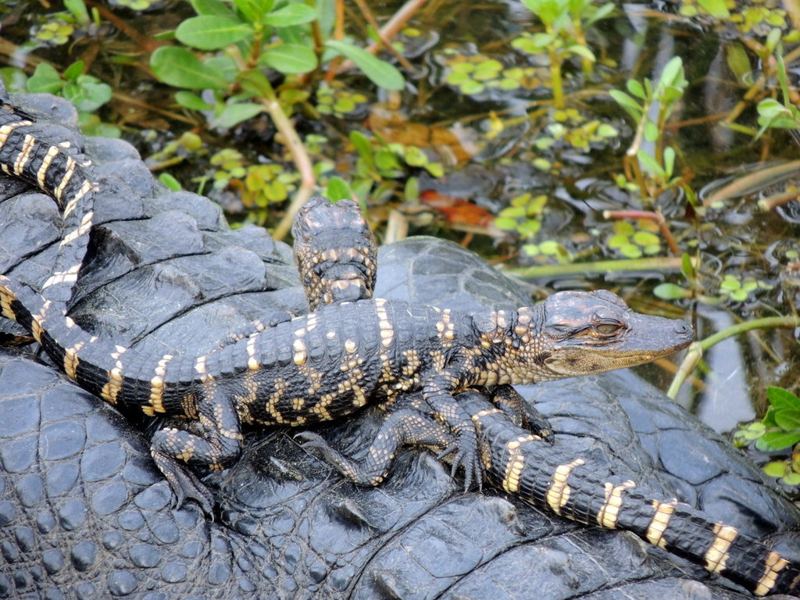 American alligator
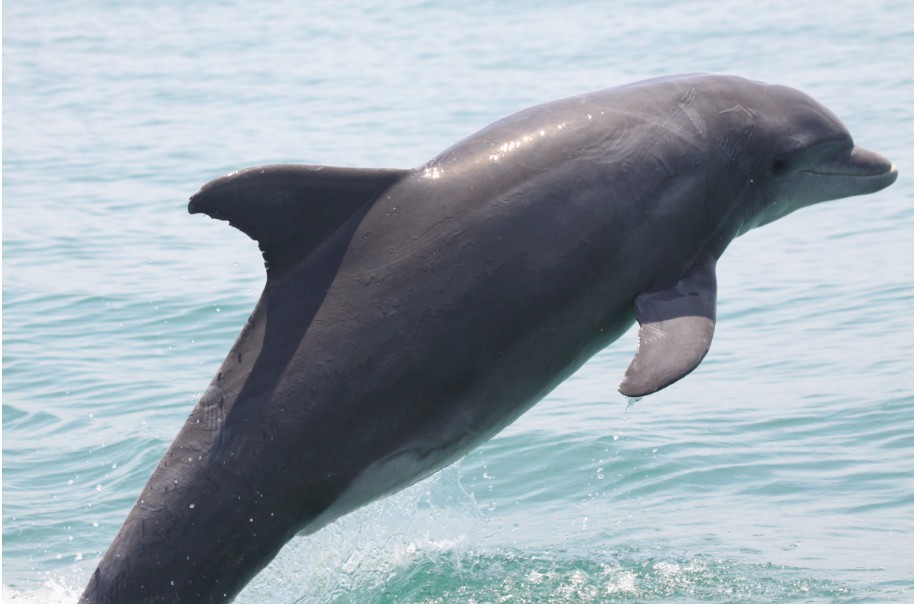
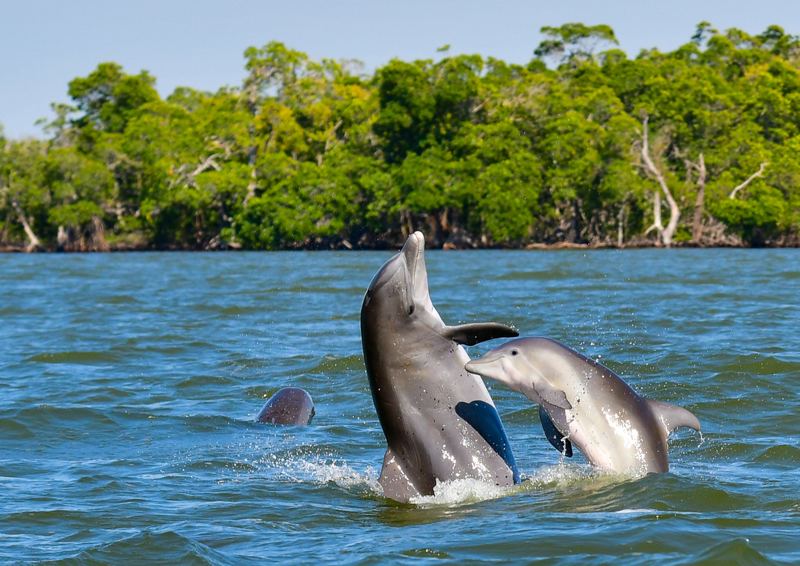 dockCommon bottlenose dolphin
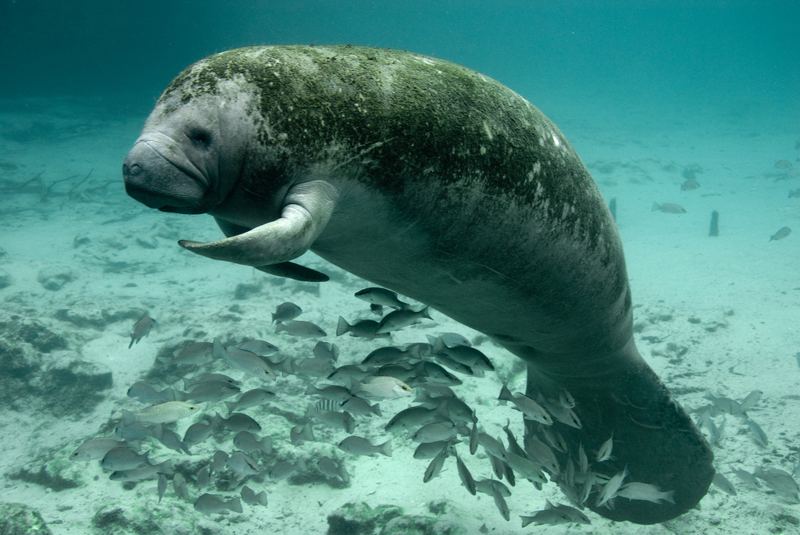 dockWest Indian manatee
“dock” marks the ones the research rates most likely to be heard from a dock. Real photos, credited on the Science page.
The moving strip is a spectrogram: time runs left to right, pitch bottom to top, brighter is louder. A dolphin whistle is a curving line; each thin vertical stripe is a click, far above what people can hear.
Until the microphone is in the creek, the node plays a real research recording of wild bottlenose dolphins through the same software, and labels it a simulation.
The microphone lives on the dock, but you shouldn't have to walk down there. The OCEAN app on a tablet in the kitchen shows what the creek sounds like right now, who's been around today, how far each sound has been checked, and how the station is doing.
What the creek sounds like, and what's been around
Known from the recording being replayed; our software doesn't name species.
Asking NOAA…
Nothing is in the water yet. Live parts are running now on a replayed research recording; Example parts are made up to show the finished design.
Stepping through the app's four screens: Now, Encounters, Creek life and Station. Open it to try them yourself.
Scroll to sink from the creek to the bottom of the Challenger Deep, 10,935 m down. Real animals appear at the depth where they were actually photographed. Nothing we've built has been below the creek yet, and the readout says so.
Scroll down to dive. Animals appear at the depth they were photographed.
Known from fossils long before scientists found one alive in 1938. This one was photographed alive, 69 m down off South Africa, in 2019.
Photo: Bruce A.S. Henderson · CC BY 4.0
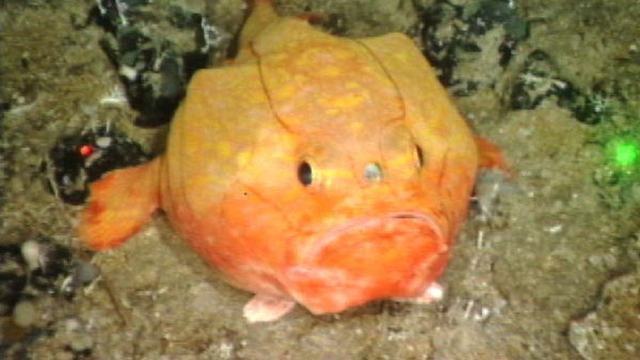
An anglerfish relative, photographed 1,860 feet down on the Charleston Bump, off the South Carolina coast.
NOAA Ocean Explorer, Charleston Bump 2003 · Public domain
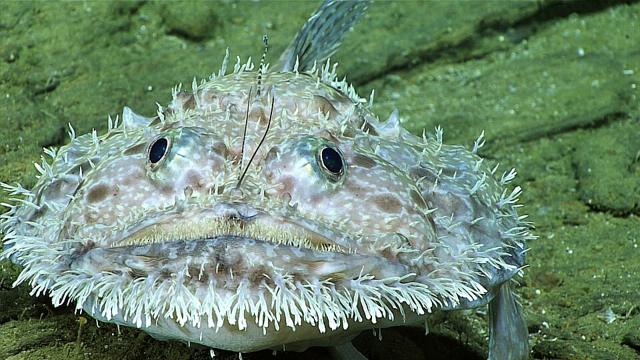
A kind of anglerfish: the lures are the thin stalks in the middle of its face. Fairly common at 600–800 m.
NOAA Okeanos Explorer, Gulf of Mexico 2018 · Public domain
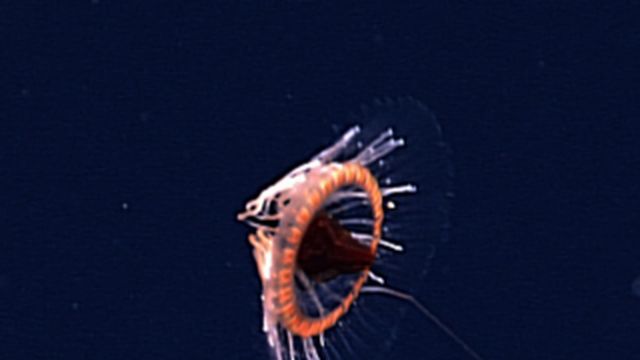
A deep-sea crown jellyfish, seen in the dark at 800 m near Puerto Rico.
NOAA Ocean Exploration, Puerto Rico 2015 · Public domain
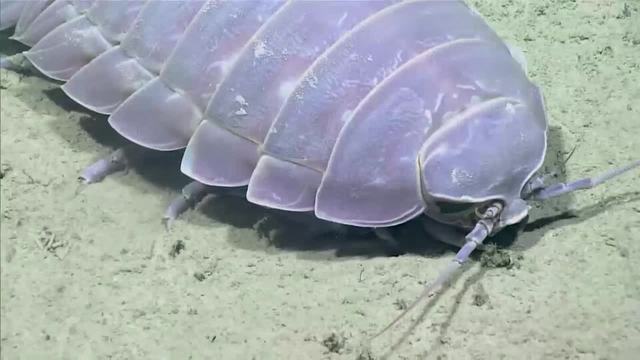
A giant relative of the pill bug, filmed by NOAA's ROV Deep Discoverer. In the video, two red laser dots 10 cm apart show its size.
NOAA Ocean Exploration, Gulf of Mexico 2017 · Public domain
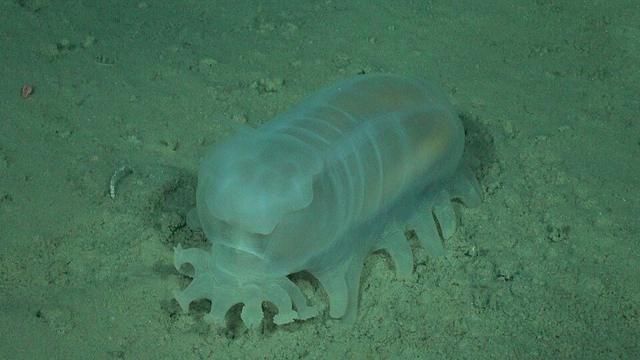
A sea cucumber that walks the deep seafloor on tube feet. This one was seen at 2,803 m off Alaska.
NOAA Ocean Exploration, Seascape Alaska 2023 · Public domain

Swims with ear-like fins. The coiled-arm posture in this photo had never been seen before in its species. Its photo record doesn't say how deep it was.
NOAA Okeanos Explorer · Public domain
Not a game score: a record of where we've actually put something in the water. Right now, nowhere. Each zone gets ticked off only when something we built comes back up from it.
Curious how it all works? How it works · About us