OCEAN
The science

How we know what we know.

What we've built and measured, the research data and open-source projects it stands on, the hardware we're about to build, where we're going, and the questions we can't answer yet. Every number here comes from a test anyone can rerun from our code.

59
sound-making animals researched
21,854
clicks labelled in our test recording
2
detectors built and scored
6
datasets checked, licences and all
8
open projects we build on
The plan, six phasesSee the roadmap
  1. Software on a recording
    Running
  2. More ocean in the simulator
    Next
  3. Our hydrophone
    Later
  4. The creek
    Later
  5. Species and standards
    Later
  6. The camera
    Later
1 · Where we are

Built, tested, planned.

The software came first, on purpose: it runs on a real research recording through exactly the code the creek hardware will use, so all of it could be built and tested before anything went in the water.
2 running2 tested1 in hand1 paused1 researched4 planned

Node software

Running

Reads audio, draws spectrograms, makes a listenable preview, runs detectors, cuts clips, and queues everything when offline. Runs continuously on Google Cloud, replaying a research recording.

This website

Running

Live picture of sound, events, and every label (Simulation, Known, Detected) shown where it applies.

Two sound detectors

Tested

One for dolphin click trains, one for whistles, scored against the scientists' own labels.

Comparison with PAMGuard

Tested

Done for clicks. Whistles wait on running PAMGuard's whistle detector ourselves.

AI analyst (Gemini)

Paused

Tested as a second opinion on detected clips, scored like any detector. Switched off on the live node during a cost review.

Gray's Reef recording (Georgia)

In hand

Downloaded and catalogued. No scenario plays it yet, so the site doesn't use it today.

South Carolina estuary recordings

Researched

NOAA's estuary network records creeks like ours. Next in line after Gray's Reef.

Dolphin species classifier (delphinID)

Planned

Chosen; integration not started.

Our hydrophone (H1)

Planned

Specification, shopping list and build checklist written. Not built yet.

Creek deployment

Planned

Site survey first: depth at low tide, current, mounting, Wi-Fi reach.

Drop camera

Planned

A ladder of stages from a tub test to a research ship.

2 · The data

Real recordings, with their licences.

The site plays one recording today: a wild bottlenose dolphin encounter off the coast of Spain. Our closest-to-home recording, from Gray's Reef off Georgia, is downloaded but not playing yet, and South Carolina's own creek recordings are next after that. Every recording carries its source, citation, licence and a checksum in our repository, and the licence decides what each one may be used for.

Bottlenose dolphin Event 006

Garraf coast, Spain (NW Mediterranean)
Running

8 minutes of a wild bottlenose encounter, recorded on a HydroMoth at 250,000 samples a second, with the scientists' labels: 15 validated whistles and 21,854 classified clicks.

Our use: The only recording the site plays today, and the ground truth our detectors are scored against.

CC BY 4.0Source

NOAA SanctSound, Gray's Reef (GR01)

Gray's Reef National Marine Sanctuary, off Georgia
In hand

A 4-hour raw recording at 48,000 samples a second, from an hour with documented dolphin whistles. The closest to home we have so far.

Our use: Downloaded; the next scenario to build, so the site plays Southeast water too.

ESONS, South Carolina estuaries

May River, Charleston Harbor and other SC creeks
Researched

Long-running recordings from creeks and harbors like Bohicket Creek: snapping shrimp, toadfish, drum, seatrout, dolphins and boats.

Our use: Our best local source for testing, and later training, detectors.

Public NOAA archive; dataset terms to verifySource

MBARI passive acoustic data

Monterey Bay, California
Researched

Long-term Pacific recordings at 256,000 samples a second.

Our use: Candidate for West Coast species.

Reported CC BY 4.0; to verifySource

FishSounds

Worldwide
Researched

An index of fish sounds: over a thousand soniferous species and their recordings.

Our use: Discovery and reference only; not for training anything commercial.

CC BY-NC, plus per-recording termsSource

Orcasound

Salish Sea, Washington
Researched

Annotated orca recordings from a community hydrophone network.

Our use: Benchmark only.
CC BY-NC-SASource
3 · What's down there

What a microphone could hear, coast by coast.

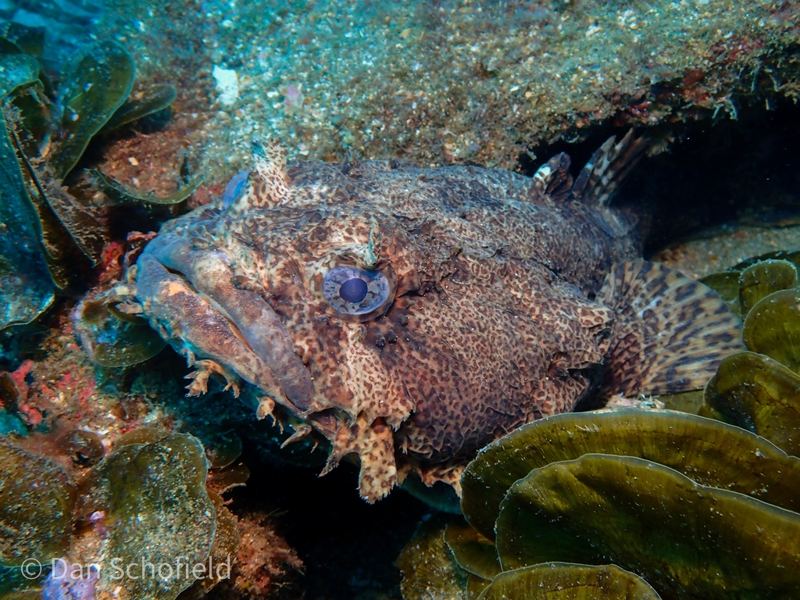
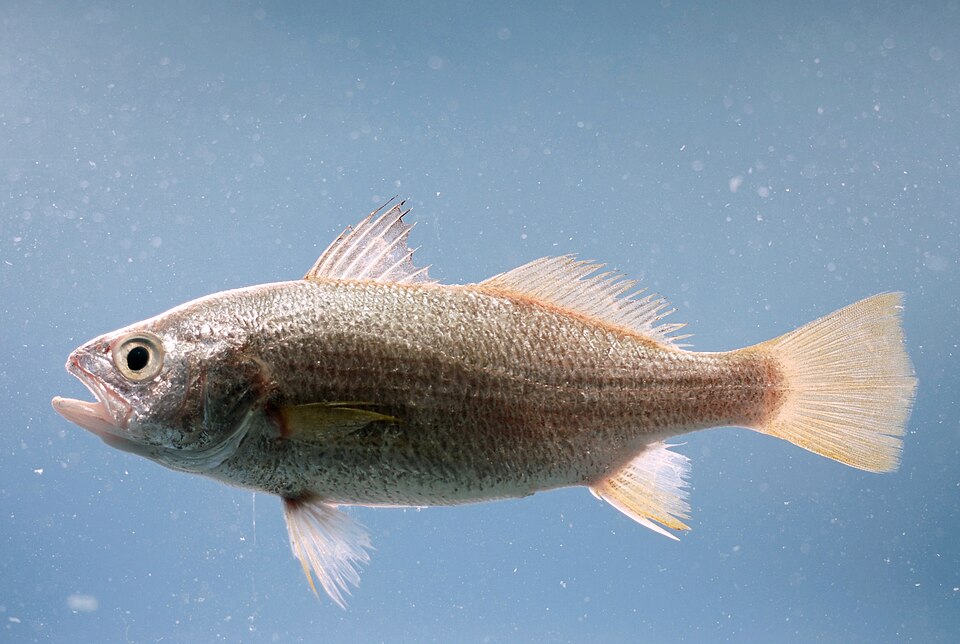
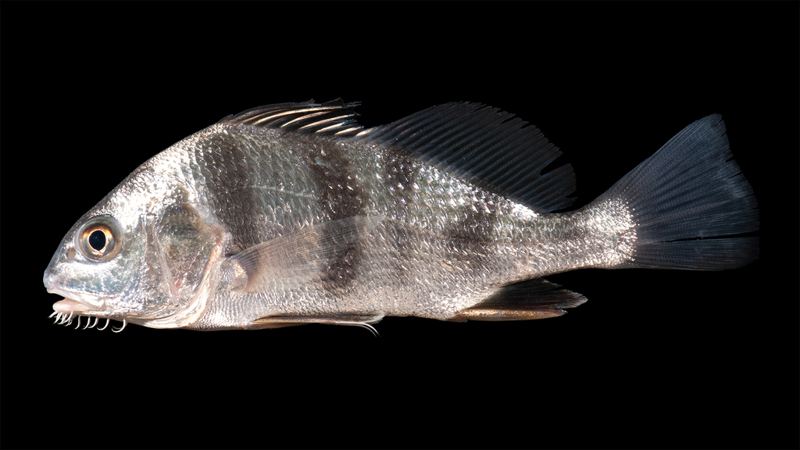
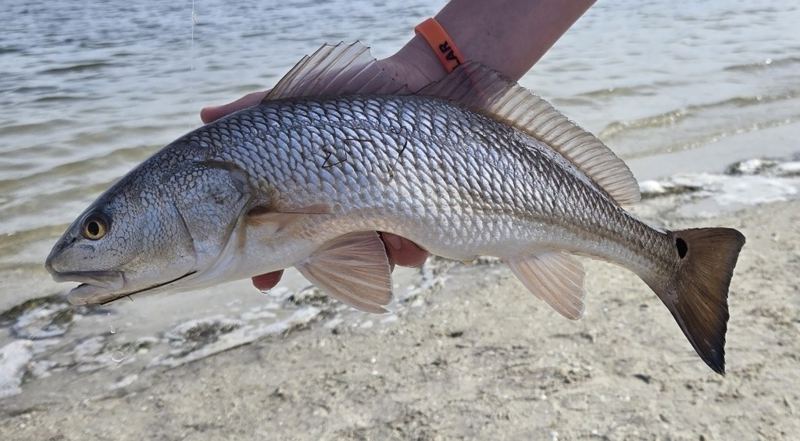
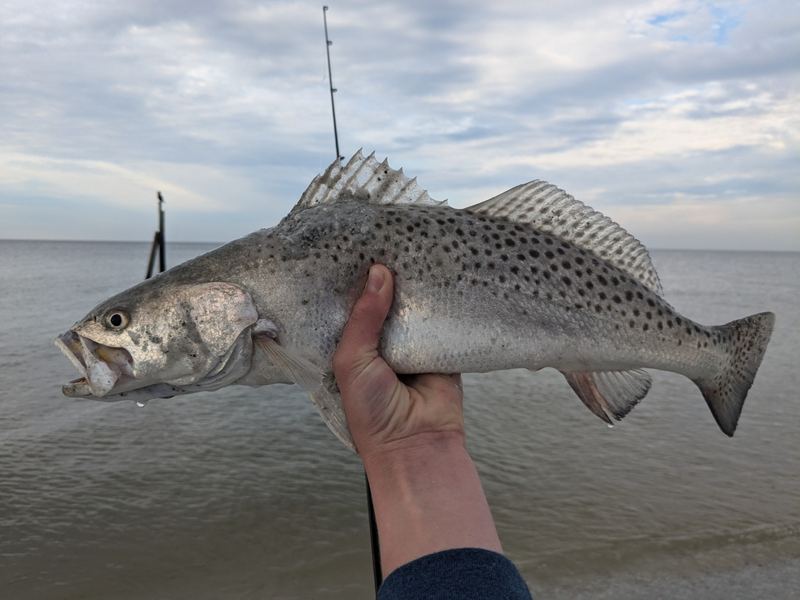
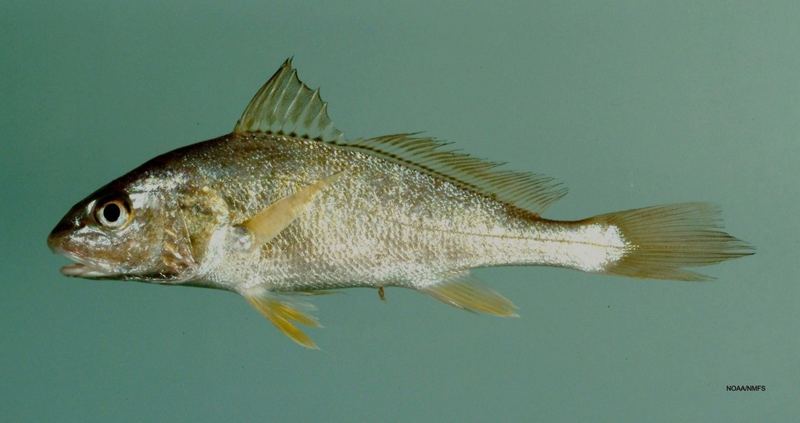
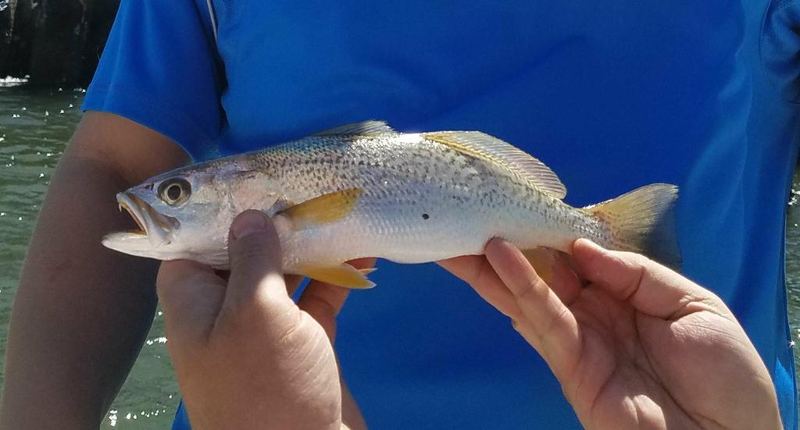
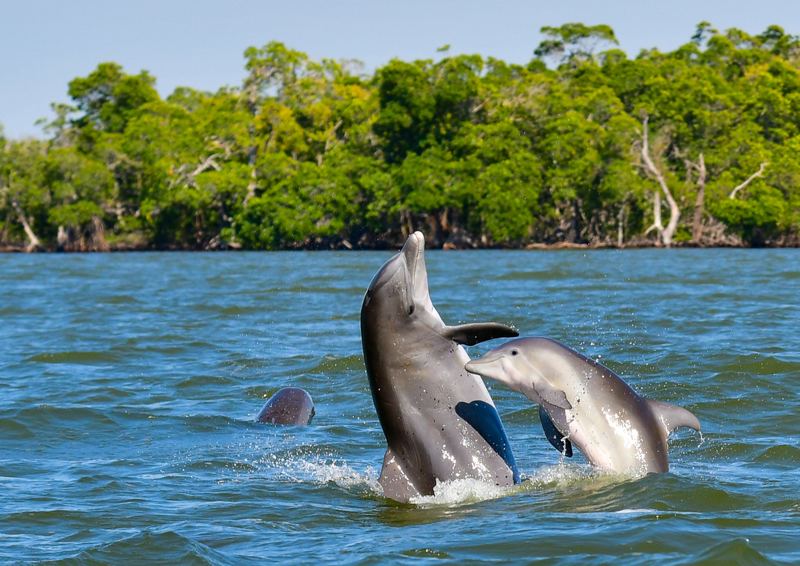
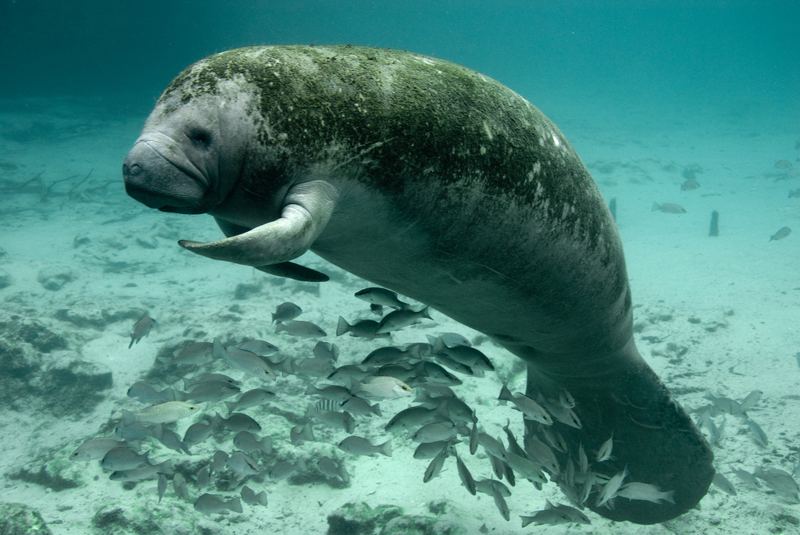
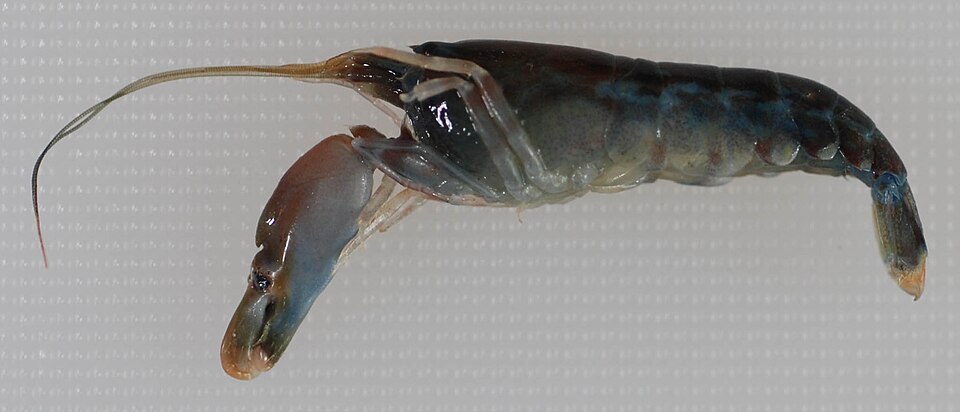
We researched 59 underwater sound sources across North American coasts: where each lives, when it calls, how distinctive it is, what recordings exist and under what licence. For a Southeast creek like ours that means snapping shrimp, oyster toadfish, silver perch, black and red drum, spotted seatrout, Atlantic croaker and bottlenose dolphins, plus boats, rain and wind as sounds to recognise and set aside. The pitch chart on How it works shows where each one sits.

From our North American species research: each animal's region, sound, what recordings exist and under what licence. “From a dock” is the research's own 1–5 rating, a planning estimate rather than a measurement. Photos are real and credited, from iNaturalist observers and Wikimedia Commons, under public-domain or CC BY licences.

4 · How well it works

Our detectors, scored.

Both detectors are plain signal processing, not machine learning: every setting is visible and every result can be reproduced with one command. A detection counts as right only if it overlaps a sound the scientists labelled. These numbers come from one recording of one encounter, so they show the method works, not how it will do in our creek.

Click bouts, minute 4

Labelled sounds
9 of 13
Extra detections
4
found missed extra

Found most bouts, with as many false starts as misses.

0.69Recall
0.69Precision

Whistles, minute 1

Labelled sounds
15 of 15
Extra detections
33 unverified
found missed extra

Every labelled whistle found. The dataset published 15 of its 92 validated whistles, so many of the 33 extras may be real; precision can't be measured until the rest are found.

1.00Recall
?Precision

Click bouts, minute 1

Labelled sounds
4 of 4
Extra detections
4
found missed extra

Nothing missed, but half of what it flagged wasn't a labelled bout.

1.00Recall
0.50Precision

Against PAMGuard

About three quarters of the clicks we find sit within 5 milliseconds of a click PAMGuard found, with a steady lag of 0.6 to 0.7 ms. That lag comes from our smoothing, not a disagreement about when clicks happen. We miss about a quarter of PAMGuard's fainter clicks; lowering our threshold finds them but adds false ones.

The AI second opinion

Precision
0.33 alone
0.53 with Gemini
Recall
0.87 alone
0.60 with Gemini

Used as a filter on our whistle candidates, it cut false alarms but threw away real whistles. It is never allowed to confirm anything; its view is labelled “AI interpretation”. It's switched off on the live node for now.

5 · Projects we use

Open science and open source.

OCEAN stands on work that scientists and engineers have shared openly. Here's each project, who makes it, its licence, and exactly how we use it.

PAMGuard

Sea Mammal Research Unit, University of St Andrews, and contributors

The standard open-source software for passive acoustic monitoring: it detects, classifies and locates whale, dolphin and other animal sounds, and is used on research ships and monitoring projects worldwide.

How we use it: Our reference. The dolphin recording was published with PAMGuard's click output, and we compare our own detectors against it on the same audio.

delphinID (which.dolphin)

Kleyn, Janik, Hammond, Oswald and colleagues, University of St Andrews

Pretrained neural networks that tell northeast Atlantic dolphin species apart from their whistles and clicks. For bottlenose dolphins it scores F1 0.81 combining both, and it sets aside ambiguous encounters rather than guessing.

How we use it: Our planned species step. It works on PAMGuard-style detection features, not raw audio, so plugging it in is real work. It will only ever add a species guess with its confidence.

CC BY 4.0 (Zenodo deposit)CodeData

AudioMoth and HydroMoth

Open Acoustic Devices (University of Southampton and University of Oxford)

Low-cost open recorders. HydroMoth is AudioMoth in a waterproof case, recording up to 384,000 samples a second, used by researchers around the world.

How we use it: The dolphin recording we play was made on HydroMoths. A strong candidate for our first quick creek survey.

Open hardwareWebsitePaper

OpenSoundscape

Kitzes Lab, University of Pittsburgh

A Python toolkit for finding, classifying and locating animal sounds in recordings, including training your own machine-learning detectors.

How we use it: For later, once we have labelled recordings from our own creek.

Ketos

MERIDIAN, Dalhousie University

A Python package for building deep-learning detectors and classifiers for underwater sound.

How we use it: An alternative to OpenSoundscape for the same later stage.

GPL-3.0Guide

The Gladys hydrophone

Jules Ryckebusch (retired Navy submariner), sold as a kit by JLI Electronics

A home-built hydrophone: a ceramic tube and a small protected circuit board, cast in resin. Its builders report it reaching well into ultrasonic sound.

How we use it: The basis of our H1 hydrophone. Our shopping list and build checklist follow the kit.

Open design, published on InstructablesWebsiteGuide

NumPy, SciPy and soundfile

Open-source communities

Python's scientific computing core: arrays, signal filtering, Fourier transforms, and reading and writing audio files.

How we use it: Every filter, spectrogram and detector on the node.

BSD-3-ClauseWebsiteWebsite

Next.js, React and Google Cloud

Vercel and Meta (open source); Google

The website framework, and the cloud that runs the site, the node and its storage (Cloud Run, Firestore, Cloud Storage), plus Gemini on Vertex AI for the paused analyst.

How we use it: Everything you see here. Locally, all of it runs with no cloud account at all.

MIT (Next.js, React)WebsiteWebsite
6 · Standards

Speaking the same language as science.

When real detections come from the creek, we'll publish them in the formats biodiversity archives already use, so our observations can sit alongside everyone else's.
7 · The hardware plan

Prove the sensor, then the packaging, then the speed.

We separate the risks, so if something fails we'll know which part caused it. Nothing below is built yet.
  1. 1

    H1-A · bench

    Two Gladys kits cast in Smooth-Cast 65D; a 192,000-samples-a-second recorder with 48 V phantom power

    Goal: Prove the sensor: quiet, repeatable, waterproof after a week-long soak

  2. 2

    H1-B · dock

    Same electronics cast in a marine acoustic polyurethane (NUWC XP-1 is the lead candidate), waterproof subsea cable, a non-metal standoff guard

    Goal: Survive months in salt water, clear of the piling and out of the current

  3. 3

    H1-Ultra

    A two-channel recorder at 384,000 or 768,000 samples a second from one shared clock (the E1DA Cosmos ADC is the lead off-the-shelf candidate)

    Goal: Capture far more of the dolphin click band, and time a sound's arrival at two hydrophones

Why not record everything?

Two channels at 192,000 samples a second is about 100 GB a day; at 384,000 it's about 200 GB. So the node will listen to everything but keep the moments that matter: full-quality clips around each detection, a few minutes every hour as a baseline, and a lighter continuous stream to listen to.

Honest limits

Our hydrophone won't be a calibrated scientific instrument: its ceramic rings near 43 kHz, so it hears some pitches louder than others. Until we compare it against a calibrated reference, we'll report loudness in relative units, never as sound pressure.

8 · So far

What we've done, and when.

  1. 10 Sep 2026

    First build: the node replays the dolphin recording, draws spectrograms, makes previews and heartbeats; the website shows it live; the scientists' labels become ground truth; the site goes up on Google Cloud.

  2. 11 Sep 2026

    Both detectors built and scored, compared with PAMGuard, the Gemini analyst tested, the node run on a live microphone, and the first depth-zone home page.

  3. 13 Sep 2026

    The Gemini analyst switched off on the live node after an unexplained cloud bill; the spend reconciled call by call.

  4. 14–27 Sep 2026

    Research into species, datasets and hardware; the H1 hydrophone plan; a new home page with a scroll dive and real animal photos; How it works and this page.

9 · Roadmap

Where we're going, in phases.

  1. 1Phase 1Running

    Software on a recording

    • Node, detectors, scoring, website
    • Honest labels everywhere
    • Runs continuously in the cloud
  2. 2Next upPlanned

    More ocean in the simulator

    • Gray's Reef recording playing on the site
    • South Carolina estuary recordings
    • Detectors tested on shrimp, fish and boats
  3. 3Phase 3Planned

    Our hydrophone

    • Build two H1s from kits
    • Tub test and week-long soak
    • Measure what it really hears
  4. 4Phase 4Planned

    The creek

    • Survey the dock
    • First supervised recording
    • Real Bohicket Creek sound on this site
  5. 5Phase 5Planned

    Species and standards

    • delphinID as a careful second stage
    • Settle 192,000 versus 384,000
    • Publish detections in Darwin Core and OBIS
  6. 6Phase 6Planned

    The camera

    • Tub, dock, harbor, lake, offshore
    • Footage with depth and temperature
    • Every drop logged here
Phases 3 and 6 are hands-on: they're the hydrophone and camera the project was built around.
10 · Open questions

What we don't know yet.

  1. 1Everything measured so far comes from one Mediterranean encounter, recorded 5 to 7 m deep with the engine off. Bohicket Creek is shallow, murky, tidal and full of snapping shrimp and boats. Expect every threshold to move.
  2. 2Where do bottlenose clicks carry their energy at our creek? Two sources disagree: an average of 33–109 kHz, or a peak at 110–130 kHz. The answer decides the recorder.
  3. 3Whistle precision can't be measured until the dataset's full set of 92 validated whistles is found; only 15 were published with it.
  4. 4How to mount a hydrophone in a strong reversing current without cable strum or noise from the piling.
  5. 5Whether an AI model can be a first-stage detector at all, rather than a second opinion. Untested.
  6. 6Which recordings we're actually allowed to train on. Publicly downloadable isn't the same as licensed.
11 · References

Sources.

  1. 1Chaparro, L., Rodero, C., Marco, N., Giralt, O., EMBIMOS research group (ICM-CSIC) & Associació Cetàcea (2025). Dataset of Bottlenose Dolphin Acoustic Recordings from Boat-Based Encounters Using HydroMoth Devices, Event 006. Zenodo. link
  2. 2NOAA Office of National Marine Sanctuaries and U.S. Navy (2020). SanctSound Raw Passive Acoustic Data. NOAA NCEI. link
  3. 3PAMGuard: application software for passive acoustic detection, classification and localisation of animal sounds. Journal of the Acoustical Society of America 159(1), 437. link
  4. 4Kleyn, T. et al. (2025). delphinID: pre-trained classifiers for northeast Atlantic delphinid species, v1.01. Zenodo. link
  5. 5Hill, A. P. et al. (2018). AudioMoth: Evaluation of a smart open acoustic device for monitoring biodiversity and the environment. Methods in Ecology and Evolution. link
  6. 6Lamont, T. A. C. et al. (2022). HydroMoth: Testing a prototype low-cost acoustic recorder for aquatic environments. Remote Sensing in Ecology and Conservation. link
  7. 7Lapp, S. et al. (2023). OpenSoundscape: An open-source bioacoustics analysis package for Python. Methods in Ecology and Evolution. link

Our code is MIT licensed. Recordings and photos keep their owners' licences and are credited where they appear. For the plain-English version, see How it works.